
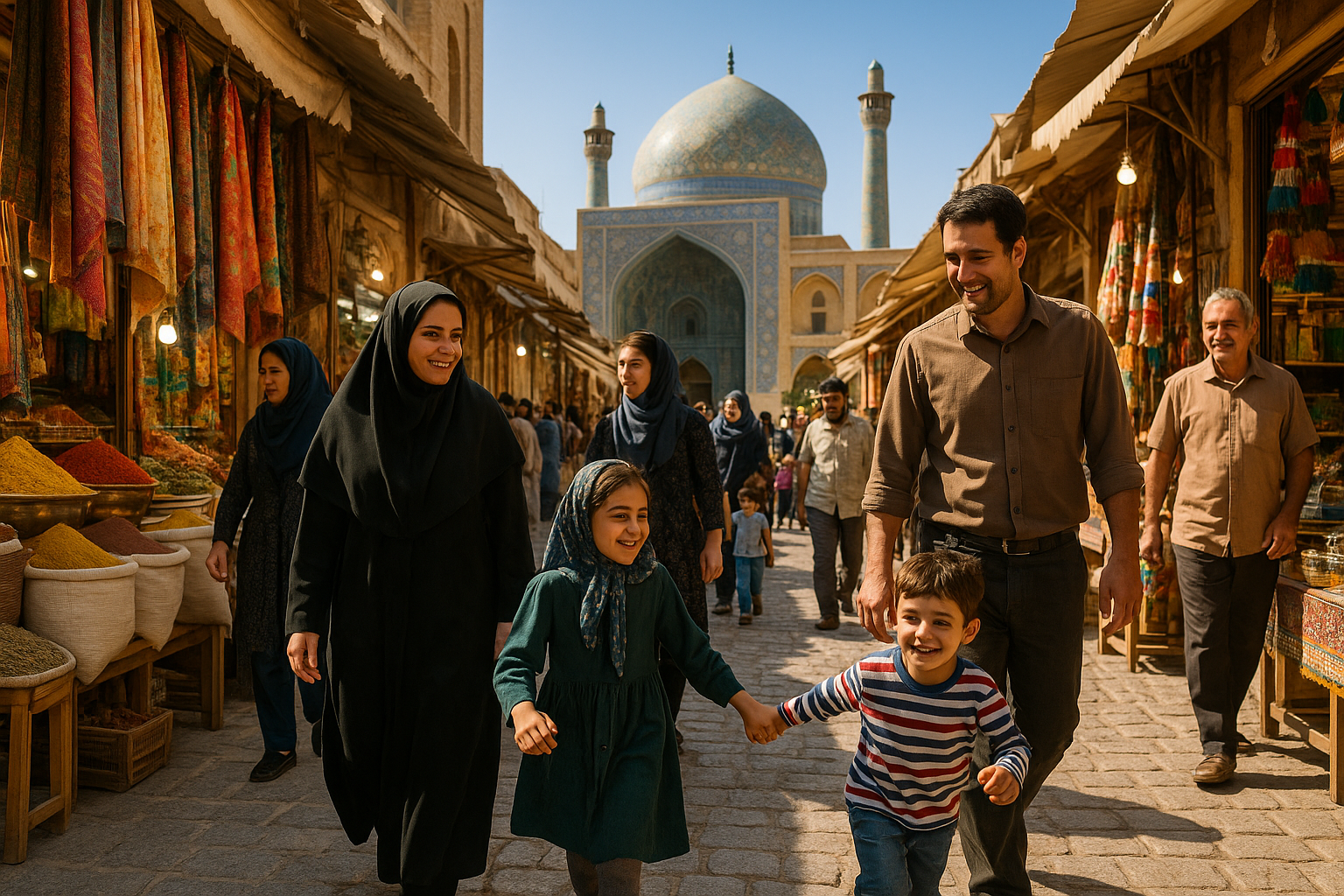

A Journey Begins: What Lies Beyond the Surface
Iran, a land often painted with broad strokes of controversy and conflict, hides a rich tapestry of culture, history, and human experiences just waiting to be explored. The headlines that frequently dominate the news cycle can lead to a misconceived understanding of this ancient nation, overshadowing its vibrant heritage and the warmth of its people. When we peel back the layers of political narratives and sensational stories, what remains is a profound narrative that speaks volumes about the Iranian soul.
In a world driven by fleeting headlines, we invite you to embark on a journey that transcends superficial perceptions. Imagine walking through the bustling bazaars of Tehran, where the scent of saffron mingles with the sounds of lively conversations. Picture the historic elegance of Isfahan, where intricate tiles tell stories older than most civilizations. This is the Iran that many never see—an Iran that thrives on intricate traditions, a rich history, and a people united by resilience and hope.
Our journey aims not only to uncover the multifaceted identity of Iran but also to celebrate its artistry, philosophy, and unwavering spirit. Every corner of this land holds tales of poets, scholars, and visionaries, each contributing to the narratives that define Iranian culture. As we delve into this exploration, we’ll engage with the modern-day realities that coexist with time-honored traditions, painting a picture of a dynamic society in evolution.
So, what lies beyond the surface of Iran? The answer is a realm filled with beauty, complexity, and humanity that invites exploration and understanding. By joining this journey, we can begin to dismantle preconceptions and be witness to the profound stories interwoven within the heart of Iran. This dance of history and culture awaits us, offering a perspective that reflects not just the challenges but also the vibrancy and warmth of the Iranian experience.
A Glimpse into Iran’s Rich History
Iran, a nation steeped in history, boasts a narrative that stretches over three millennia, characterized by a profound cultural heritage and significant historical milestones. Often overshadowed by contemporary issues, Iran’s past presents a tapestry woven from the achievements of the Persian Empire, a great civilization known for its advanced arts, architecture, and governance, which served as a foundation for many modern societies.
The Persian Empire, established in the 6th century BCE, was among the world’s largest and most influential civilizations, stretching from the Indus Valley to the Aegean Sea. Under leaders such as Cyrus the Great and Darius I, this empire not only expanded its territorial boundaries but also established a sophisticated administrative framework that promoted trade, law, and mutual respect among diverse cultures. Such ideological advancements have impacted governance structures well beyond its borders and remain relevant in modern political discourse.
Cultural plurality is another hallmark of Iran’s rich history. The confluence of various ethnic groups, languages, and religions within its territory fostered a vibrant cultural landscape. The Persian language, literature, and art reached new heights under influential figures like Rumi and Hafez, whose works continue to resonate globally. Architectural marvels, including the grand edifices of Persepolis and the intricate designs of Islamic architecture, symbolize the artistic achievements that flourished during this storied period.
Notably, pivotal moments such as the Islamic Conquest in the 7th century AD and the Mongol invasions reshaped Iran’s demographics and culture. These events brought about significant transformations yet also resulted in the assimilation of various traditions and practices that would contribute to the nation’s resilience and adaptability throughout history. Understanding these historical contexts provides deeper insights into the complexities of modern Iranian society and its perception in the global arena.
Iranian Culture: Colors, Flavors, and Sounds
Iranian culture is a tapestry woven from a rich history that spans millennia, characterized by an array of colors, flavors, and sounds that echo the country’s vibrant identity. The arts hold a significant place in daily Iranian life, manifesting in various forms, including intricate carpet weaving, calligraphy, and miniature painting. These artistic expressions are not just aesthetic pursuits; they often convey deep philosophical and historical meanings, reflecting the soul of a nation that has endured profound changes and challenges over time.
Music, too, plays a vital role in Iranian cultural identity. Traditional Iranian music, characterized by its unique modal system known as dastgah, showcases a blend of improvisational artistry and rich heritage. Instruments such as the santur, tar, and setar are essential components of this musical tradition, each contributing distinct melodies and rhythms that resonate with both the heart and spirit. Festivals and gatherings in Iran frequently feature live music performances, which serve as an invitation to experience the warmth and hospitality of the Iranian people.
Culinary traditions in Iran are equally diverse and enchanting, offering a sensory journey through foods famous for their aromatic spices and rich flavors. Signature dishes like kebabs, ghormeh sabzi (herb stew), and saffron-infused rice showcase a culinary landscape that is both age-old and continuously evolving. The art of sharing meals in Iran is a reflection of community and family values, where gatherings often revolve around the dinner table, emphasizing the importance of togetherness and connection.
Through these elements—art, music, and food—Iranian culture reveals itself as a dynamic and intricate phenomenon. It stands in stark contrast to the often one-dimensional portrayals prevalent in media narratives, inviting those eager to explore its depths to uncover the profound beauty and humanity that defines this remarkable country.
Folktales: Whispering the Soul of the Nation
Iran boasts a rich tapestry of folktales that reflect the heart of its cultural heritage. These stories, passed down through generations, serve not only as entertainment, but also as vessels of wisdom, morality, and identity. Storytelling in Iran is an ancient tradition, often conducted in intimate settings where families and friends gather to engage in the spellbinding art of narrative. The relaxed atmosphere, much like sitting beside a crackling campfire, allows the tales to come alive, enveloping listeners in a world of imagination that transcends time and space.
One noteworthy folktale is the story of “The Last Prince of Kerman.” Set in a vibrant kingdom, the tale chronicles the journey of a young prince who embarks on a quest to save his homeland from an evil sorcerer. The prince’s bravery and ingenuity symbolize the resilience that resonates deeply within Iranian culture. As he faces treacherous challenges, his encounters teach values of loyalty, kindness, and the importance of community spirit. Such themes are prevalent throughout Iranian folktales, echoing the collective consciousness of the Iranian people.
Another enchanting tale is “The Snake and the Princess,” which tells the story of an unlikely friendship between a fierce serpent and a courageous princess. This narrative highlights the theme of understanding and coexistence, reminding listeners that appearances can be deceiving. Such tales impart moral lessons, emphasizing virtues that remain relevant in today’s society. They encapsulate both the struggles and adventurous spirits of Iranians, providing a space for cultural expression and reflection.
In many ways, these folktales serve as a bridge connecting the past to the present, enabling the Iranian community to celebrate their identities while nurturing their cultural roots. The essence of storytelling, infused with love and vibrancy, continues to inspire generations, echoing the enduring spirit of the Iranian people.
Voices from the Heart: Personal Stories and Experiences
To understand the nuanced reality of Iran, it is essential to listen to the personal stories and experiences of its people. These intimate narratives provide a stark contrast to the often sensationalized headlines that dominate international media. For instance, consider the life of Fatemeh, a schoolteacher from Shiraz, who dedicates her evenings to tutoring children whose families cannot afford extra classes. She speaks of her genuine passion for educating the next generation and hopes to inspire her students to dream beyond the conventional paths that society often restricts them to. Through her eyes, we witness not only the aspirations of a teacher but also the daily struggles faced by families striving for a better future.
Similarly, Mohsen, an entrepreneur in Tehran, shares his journey of starting a small business in the midst of economic sanctions. His story reflects the resilience of many Iranians who continue to innovate and adapt despite external pressures. He discusses the challenges of limited resources and the impact of rising inflation on his workforce. Yet, Mohsen remains hopeful, emphasizing the importance of community support and collaboration among local businesses. This illustrates a vital aspect of Iranian culture: the strong sense of solidarity that emerges during tough times.
Furthermore, Leila, an artist from Esfahan, highlights the role of creativity in expressing societal issues. Her artwork often portrays the struggles of women in Iran, shedding light on topics such as gender equality and personal freedoms. Leila’s perspective demonstrates how art can serve as both a form of protest and a means of dialogue, allowing her to connect with both local and international audiences. Through these diverse voices, we gain a deeper understanding of the hopes, dreams, and challenges faced by ordinary Iranians, transcending the often-misleading narratives depicted in global media. In conclusion, these personal stories invite us to appreciate the vibrant lives of individuals who represent a rich tapestry of experiences within Iran.
Beyond Borders: Iran in a Global Context
Iran occupies a significant position in the global geopolitical landscape, characterized by its rich history, strategic resources, and complex social fabric. Often portrayed through a narrow lens, contemporary narratives surrounding Iran typically focus on its political tensions and nuclear ambitions, leading to a plethora of misconceptions that overshadow the truth about the nation and its citizens. To understand Iran fully, one must consider how international relations and global perceptions shape the lived realities of its people.
The geopolitical significance of Iran is primarily influenced by its location, sitting at the crossroads of major trade routes and neighboring critical regional players. This positioning has led to a tangled web of alliances and rivalries that transcend its borders, impacting not only the Middle East but also global security dynamics. For instance, Iran’s relationships with countries such as Russia and China contrast sharply with its contentious ties to the United States and several European nations. These relationships directly influence economic conditions and diplomacy, affecting the daily lives of Iranian citizens.
Moreover, sanctions imposed by various governments have had profound implications for ordinary Iranians, often leading to widespread economic challenges and social upheaval. Despite these adversities, Iranian society has shown resilience, fostering a vibrant cultural scene and a strong sense of identity amid adversity. However, the pervasive international stigma can hinder opportunities for growth and connections. It is essential to recognize that understanding Iran requires moving beyond headlines that simplify a complex society into a single-dimensional view and acknowledging the rich tapestry of its history, culture, and people.
In understanding Iran in its global context, it becomes clear that engaging with its realities requires a nuanced approach. Fostering intercultural dialogue and dismantling stereotypes can contribute to a more comprehensive understanding of this multifaceted nation and its significance in the world today.
Lessons from Iran’s Resilience and Adaptability
The Iranian people have exhibited remarkable resilience and adaptability throughout their history, navigating a complex landscape of social, political, and economic challenges. This resilience is deeply rooted in the nation’s rich cultural heritage, which has shaped the identity of its citizens. Historically, Iran has faced numerous adversities, including invasions, political upheavals, and sanctions. Each of these events has tested the fortitude of its people, who have continuously demonstrated the ability to adapt and thrive despite limitations.
Cultural adaptability is a hallmark of Iranian society. From its ancient civilizations to the modern-day populace, Iranians have incorporated diversity into their way of life, embracing various cultural influences while preserving their core values. This blend of tradition and modernity not only fortifies their identity but also equips them to respond creatively to challenges. The pragmatic approach of Iranians in addressing life’s uncertainties illustrates a profound understanding of change, fostering a unique capability to turn obstacles into opportunities.
Moreover, the strength of community has played a significant role in the resilience of the Iranian people. In the face of adversity, communities come together, supporting one another through solidarity and cooperation. This communal response fosters a sense of belonging and shared purpose, reinforcing the idea that collective strength can overcome individual struggles. Celebrations of festivals, family gatherings, and social gatherings further embed this sense of unity, serving as a reminder of the enduring spirit of the people.
The remarkable adaptability and perseverance of Iranians resonate universally, offering insights into the resilience present in every culture. The Iranian experience highlights how, regardless of the challenges faced, the human capacity for strength and innovation remains a powerful force. These themes reflect not only the story of Iran but also the broader narrative of humanity’s enduring spirit in overcoming adversity.
Contemporary Challenges: A Modern Iranian Perspective
The landscape of contemporary Iran is marked by a myriad of challenges that shape the lives of its citizens, particularly the younger generation. Among the most pressing issues are social, economic, and political difficulties that affect the everyday experiences of Iranians. These challenges are compounded by a complex historical context, leading to a society that is both resilient and innovative in the face of adversity.
Economically, Iran faces significant hurdles, including high unemployment rates, rampant inflation, and stringent international sanctions that have stunted growth and limited access to essential goods. These economic conditions create a pervasive sense of uncertainty for many, particularly for the youth who aspire to build their futures amidst these difficulties. Young Iranians are increasingly entrepreneurial, leveraging technology and digital platforms to create opportunities, and this reflects a broader trend of adaptation and resilience.
Socially, young people in Iran navigate a labyrinth of cultural expectations, generational divides, and evolving norms within a society that is both steeped in tradition and influenced by globalization. The younger generation often finds itself at odds with conservative values while simultaneously embracing modernity. This duality can lead to an identity crisis, yet it also fosters a unique perspective on life, prompting discussions around gender equality, artistic expression, and lifestyle choices that challenge the status quo.
Moreover, the political climate in Iran today is intertwined with issues of freedom, rights, and representation. Activism and grassroots movements have become increasingly prevalent as citizens seek to voice their concerns and influence change. The internet and social media serve as vital tools for communication, allowing a new wave of civic engagement that transcends geographical boundaries, creating an informed population that demands a role in shaping its future.
In this complex milieu, the Iranian youth emerge not as victims of their circumstances but as proactive individuals striving to carve out their identities and futures. By harnessing their creativity and determination, they forge connections, foster dialogue, and redefine what it means to be Iranian in a world that is anything but static.
A Reflection: Connecting the Past, Present, and Future
As we reach the conclusion of our exploration into the multifaceted nature of Iran, it becomes essential to reflect on the intricate tapestry of history, culture, and personal narratives that shape this nation’s contemporary reality. The Iran we perceive from afar often hinges on a sequence of headlines that scarcely capture the rich legacy and diverse experiences of its people. Yet, as we delve deeper, we uncover a landscape of historical echoes interwoven with the current socio-political fabric that invites a reassessment of preconceived notions.
Iran’s history is a profound narrative that extends far beyond the confines of geopolitical conflict or social strife. It is a story of resilience that spans millennia, showcasing a civilization marked by contributions to art, science, and philosophy. Understanding this historical context is crucial, for it informs our interpretation of current events and social dynamics. The personal stories we encounter—a blend of tradition and modernity—highlight the aspirations, struggles, and adaptability of Iranians in a rapidly changing world. Each narrative serves as a reminder that beneath the surface of media portrayals lie the hopes and dreams of millions.
This reflection on Iran encourages us to reassess our engagement with not just this nation, but with the world at large. It prompts critical inquiry into how our perceptions shape our understanding of cultural identities and international relations. The lens through which we view Iran ultimately influences our perspectives on broader issues of human rights, governance, and cultural exchange. By appreciating the nuances and complexities ofIranian society, we foster a more informed and empathetic approach to global citizenship. Recognizing these connections is vital as we move forward, inviting an ongoing dialogue that transcends boundaries and promotes mutual understanding.
Explore More: Dive Deeper into Iran’s Story
As we conclude our examination of Iran’s multifaceted narrative, we invite you to engage further with this remarkable nation through an enriching visual experience. Embedded within this post is a video designed to complement the textual journey you have just explored. This compelling visual narrative not only highlights Iran’s vibrant history but also showcases its rich cultural heritage, which often remains obscured by prevalent stereotypes.
In recent years, the media portrayal of Iran has been predominantly influenced by political agendas, often neglecting the intricate layers that make up its identity. The video provides a unique perspective, allowing viewers to see beyond the headlines and delve into the everyday lives of its people. From stunning architectural marvels to the warmth of local traditions, the visuals aim to counterbalance the misconceptions propagated in various narratives.
The footage takes you through serene landscapes, bustling bazaars, and intimate family gatherings that reflect the true spirit of Iranian life. By witnessing these moments, it becomes evident that Iran is not solely defined by its geopolitical struggles, but also by its artistic expressions, culinary delights, and unwavering hospitality. The storytelling format employed in the video enhances the understanding of Iran’s diverse culture and historical depth, aligning seamlessly with the themes discussed in this article.
We encourage you to immerse yourself in this audio-visual journey, which aims to broaden your perspective on Iran. Engaging with this content not only informs but also fosters a connection with a society rich in history and resilience. As you watch, consider the contrasts and similarities that enrich our global tapestry, and reflect on how narratives shape our understanding of distant cultures.