

Introduction to the Forbidden City
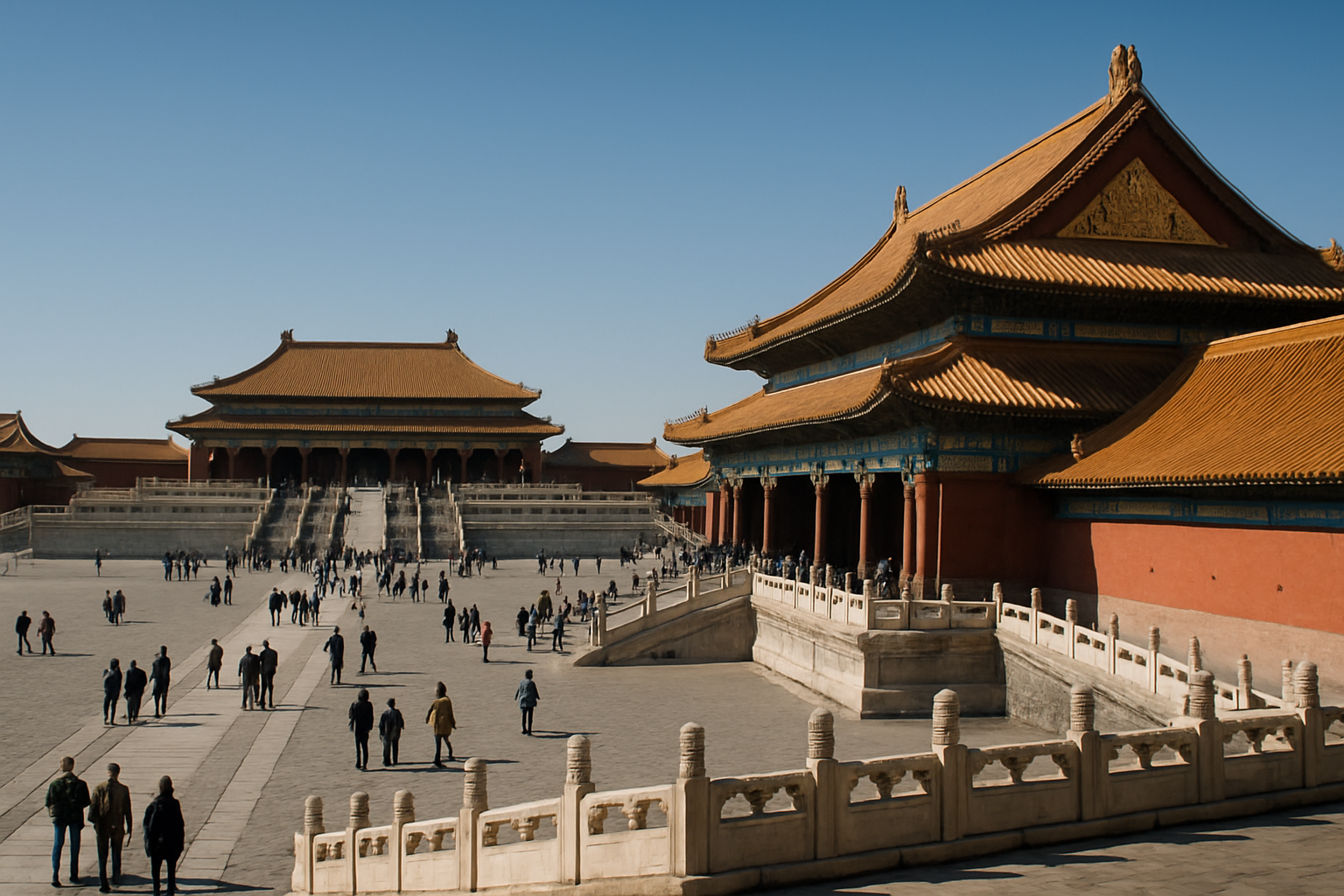
The Forbidden City, located in the heart of Beijing, stands as a testament to the grandeur of ancient Chinese architecture and imperial history. Spanning approximately 180 acres, this palatial complex served as the imperial palace for the Ming dynasty from 1420 until the end of the Qing dynasty in 1912. It is not only significant for its architectural splendor but also for its role as the ceremonial and political center of Chinese government for nearly five centuries. The very name ‘Forbidden City’ denotes its historical exclusivity, as access was denied to the general populace, with entry reserved for royals and select officials.
Constructed with meticulous planning, the Forbidden City features over 900 buildings, showcasing traditional Chinese palatial architecture with its characteristic roofs adorned with yellow glazed tiles, red walls, and intricate wooden structures. This complex illustrates the traditional cosmological beliefs of the Chinese, emphasizing harmony between the earth and heaven. Through its detailed designs, the Forbidden City encapsulates the essence of imperial authority and the cultural philosophies of its time, reflecting the values of balance, order, and respect for heritage.
In contemporary culture, the Forbidden City is viewed not only as a significant historical site but also as a UNESCO World Heritage Site, attracting millions of visitors annually who come to appreciate its architectural brilliance and historical significance. It remains an enduring symbol of Chinese imperial culture and architectural prowess, representing the culmination of centuries of tradition. As we delve deeper into its majestic structures and the rich history that surrounds them, the Forbidden City’s relevance continues to resonate within modern society, serving as an essential emblem of China’s rich past.
Historical Context of the Forbidden City
The Forbidden City, located in the heart of Beijing, is an iconic symbol of China’s imperial history and architectural prowess. Constructed between 1406 and 1420 during the Ming Dynasty, this vast palace complex served as the residence of emperors and the ceremonial and political center of the Chinese government for nearly 500 years. With its impressive layout and intricate designs, the Forbidden City represents the zenith of traditional Chinese architecture.
The establishment of the Forbidden City was initiated by Emperor Yongle, who relocated the capital from Nanjing to Beijing. The choice of location was strategic, representing a shift in political power and emphasizing the emperor’s authority. Spanning over 180 acres, the site comprises nearly 1,000 buildings, showcasing elaborate wooden structures and vibrant decorations. Throughout the centuries, the Forbidden City underwent several renovations and expansions, particularly under the Qing Dynasty, which further enriched its architectural heritage.
The significance of the Forbidden City transcends its physical attributes; it played a crucial role in the sociopolitical dynamics of several dynasties. The palace complex was not only a place for imperial family members but also a hub for state officials and scholars. Political decisions made within its walls had far-reaching implications on China’s governance and cultural practices. The layout of the Forbidden City, designed according to traditional Chinese cosmology and Feng Shui principles, reflects the deep-seated beliefs regarding harmony and order among the universe, the emperor, and the state.
As dynasties rose and fell, the architectural features of the Forbidden City adapted to reflect contemporary tastes and political ideologies. This evolution illustrates how historical contexts shaped the design and functionality of this grand site. The Forbidden City remains a testament to China’s rich history, providing insights into the lifestyles and values of the emperors who once inhabited its elaborate halls.
Architectural Design and Layout
The Forbidden City, a prime example of ancient Chinese architecture, exhibits a meticulously planned layout that adheres to the principles of feng shui, emphasizing harmony and balance within the environment. Its orientation aligns with cardinal directions, which is a significant aspect of traditional Chinese design, ensuring that the structure harmonizes with the natural world. The layout is characterized by a coherent symmetry, where the central axis serves as the backbone of the entire complex, facilitating a clear understanding of hierarchy and order.
At the heart of the Forbidden City is the central axis, running from the south to the north, which embodies the importance of spatial organization in ancient Chinese society. This axis is flanked by various halls and courtyards, creating a linear progression that guides visitors through the imperial space. The various building complexes and significant structures, including the Hall of Supreme Harmony, are positioned along this axis, reinforcing the concept of hierarchy—the emperor, as the Son of Heaven, occupies the most central and elevated position, signifying his paramount status.
The layout also integrates a series of courtyards, each with specific functions that reflect the complex social hierarchy of imperial life. The spatial arrangement promotes both communal and private interactions, further emphasizing the stratification inherent in ancient Chinese culture. The courtyards are designed to enhance the flow of movement and light, reinforcing the principles of feng shui by welcoming natural energy into the spaces. This careful consideration of design not only showcases the architectural ingenuity of the period but also reflects the values and beliefs central to ancient Chinese society.
Through its architectural design and layout, the Forbidden City stands as a testament to the sophisticated understanding of space and its cultural significance in ancient China, encapsulating the delicate balance between tradition and functionality.
Key Architectural Features
The Forbidden City, a UNESCO World Heritage site, showcases multiple architectural components that underscore the grandeur of ancient Chinese architecture. One of the most prominent features is the extensive use of wooden structures, which is reflective of the traditional techniques employed during its construction. With a staggering number of wooden beams and columns, the buildings exhibit remarkable craftsmanship, utilizing interlocking construction methods that enhance stability and durability. This choice of material not only highlights the tradition but also serves as an testament to the ancient builders’ understanding of their environment, particularly in a region prone to earthquakes.
Additionally, the roofs of the Forbidden City are a significant architectural hallmark, characterized by their unique curvilinear shape, adorned with vibrant yellow glazed tiles. The use of gold in roof design was not merely aesthetic; it symbolized the imperial authority and connection to the divine. The tiered nature of the roofs is also functional, allowing for effective rain runoff, a vital feature given China’s climate. The elaborate decorative elements that accompany these roofs, including intricately carved brackets and eaves, further embody the artistic excellence prevalent in Chinese architecture.
Courtyards within the Forbidden City play a vital role in the layout and functionality of the space. The organization of various halls and pavilions around these courtyards emphasizes both order and hierarchy, essential tenets of Confucian philosophy that influenced architectural design in ancient China. Gates, such as the Meridian Gate, not only serve as entrances but also hold symbolic meanings regarding status and security, marking the transition from the outside world to the sacred space within. Each of these architectural features contributes to the overall narrative of the Forbidden City, reflecting a seamless blend of aesthetics and symbolism fundamental to traditional Chinese architectural theory.
Symbolism in Design and Decoration
The Forbidden City stands as a testament to the intricate relationship between architecture and symbolism, reflecting the power and authority of the Ming and Qing dynasties. One of the most prominent aspects of its design is the use of specific motifs that underscore the emperor’s supremacy and connection to the cosmos. Dragons, considered the embodiment of imperial power, adorn the roofs and walls, symbolizing strength and authority. This majestic creature is deeply ingrained in Chinese culture, representing not just the emperor, but also the idea of divine protection and guidance. Its presence throughout the Forbidden City reinforces the notion that the emperor was divinely appointed to govern.
Another significant motif is the phoenix, which represents harmony and prosperity. Often portrayed alongside the dragon, the phoenix is emblematic of the empress, emphasizing the balance of yin and yang within the imperial family. These dual symbols highlight the importance of unity in governance, as well as the broader philosophical ideal of harmony in society. Such carefully crafted representations serve to reinforce the legitimacy of the imperial rule, as they resonate with the populace’s belief in celestial order.
Color symbolism further enriches the architectural narrative of the Forbidden City. The predominant use of red signifies happiness and good fortune, while yellow, reserved for the emperor, represents the earth and its relationship with the heavens. Black, as a color associated with masculinity and the North, adds another layer of meaning to the structures within the complex. The deliberate choice of colors not only enhances aesthetic appeal but also conveys deeper meanings that echo the values and beliefs of the time.
Through these design choices and decorative elements, the Forbidden City emerges as more than just an architectural wonder; it embodies the metaphysical concepts of power, harmony, and the cosmic order, solidifying its place as a marvel of ancient Chinese architecture.
Materials and Construction Techniques
The construction of the Forbidden City, a UNESCO World Heritage Site and a pinnacle of ancient Chinese architecture, demonstrates remarkable ingenuity through the selection of materials and innovative construction techniques utilized during the Ming and Qing dynasties. Primarily, wood served as the dominant material due to its abundant availability in China, which allowed craftsmen to intricately design exquisite structures, including the grand gates and ceremonial halls. The substantial use of high-quality timber, such as fir and pine, ensured both structural integrity and aesthetic appeal in different elements of the complex.
Stone, particularly in the form of granite and marble, was strategically integrated into the architecture, primarily for essential structural components like foundations and pavements. This careful combination of materials not only contributed to the durability of the Forbidden City but also enhanced its visual grandeur, reflecting the power and prestige of its emperors. Artisan builders employed traditional techniques that included sophisticated joinery and interlocking systems which eliminated the necessity for nails. This method allowed for flexibility during seismic events, showcasing innovative adaptations to natural challenges.
Another remarkable aspect of the construction process was the use of color and decoration, where artisans utilized natural pigments derived from minerals and plants to create vivid vermilion, gold, and azure hues. This emphasis on aesthetics was coupled with rigorous architectural principles that dictated proportions, symmetry, and harmony, all of which were fundamental in ancient Chinese architecture. Furthermore, construction faced numerous challenges, including the requirement for precision, the transportation of materials over vast distances, and the need to maintain consistency across a sprawling complex. However, these challenges birthed innovations that have influenced architectural practices throughout Chinese history.
Comparative Analysis with Other Chinese Architectures
The Forbidden City, with its grand scale and intricate design, serves as a pivotal example of ancient Chinese architecture that distinguishes itself from other notable structures such as pagodas, temples, and gardens. While each of these architectural forms possesses unique features and symbolic meanings, the Forbidden City exemplifies a synthesis of several traditional styles and techniques. Characterized by its vast courtyards and symmetrical layout, this imperial palace showcases the essence of ‘yin’ and ‘yang,’ promoting harmony within its design.
In contrast to the Forbidden City, pagodas often stand as vertical structures designed primarily for religious purposes. These tower-like buildings, which frequently feature tiered roofs, reflect Buddhist architectural influences. The narrative of a pagoda’s elevation represents a spiritual ascent, while the combination of wood and brick materials highlights a more three-dimensional aesthetic approach. Furthermore, while the Forbidden City encompasses a vast complex that includes various halls and gardens, pagodas serve a more singular purpose, often forming focal points within temple complexes.
Temples and gardens in ancient China also contribute to the rich tapestry of architectural diversity. Temples often adopt a more simplified design compared to the elaborate palatial expressions found in the Forbidden City. They prioritize sanctity, utilizing less ornamentation while emphasizing worship spaces and altars. Meanwhile, traditional Chinese gardens reflect philosophical ideals, promoting balance and tranquility through natural elements and meticulous layout. The Forbidden City incorporates garden spaces, yet it positions them within its grand imperial context, embodying an expression of sovereignty and power that is less evident in typical garden settings.
Ultimately, the study of the Forbidden City within the broader spectrum of Chinese architecture illuminates not only the unique characteristics of its design but also the shared cultural values embedded within various architectural expressions across the nation.
Preservation and Restoration Efforts
The Forbidden City, a pinnacle of ancient Chinese architecture, has been subject to various preservation and restoration efforts throughout its storied history. As a UNESCO World Heritage site, its conservation is paramount, facing challenges from both natural degradation and the pressures of human activity. Over the years, factors such as pollution, environmental conditions, and tourism have posed significant threats to the structural integrity and aesthetic qualities of this historical monument.
One of the foremost challenges in preserving the Forbidden City is its exposure to the elements. Rain, wind, and fluctuating temperatures have contributed to the deterioration of its wooden structures and painted surfaces. In response, meticulous conservation practices have been implemented. These include the use of traditional materials and techniques that align with the methods originally used in the construction of the site. The goal is not only to maintain the building’s historic fidelity but also to ensure that future generations can appreciate its cultural significance.
Ongoing restoration projects, often involving a collaborative effort between historians, architects, and artisans, aim to address specific structural damages while enhancing the nearby landscapes. For instance, the protection of the courtyard arrangements and the delicate roof designs are crucial to the integrity of the entire complex. Additionally, a focus on sustainability within these restoration efforts is emerging, addressing the impact of visitor numbers and the necessity of engaging the public in conservation awareness.
Ultimately, the preservation of the Forbidden City goes beyond mere structural maintenance; it encapsulates the commitment to safeguarding a vital link to China’s rich historical legacy. Continuous efforts in restoration not only protect this architectural marvel but also reaffirm its significance as an emblem of ancient Chinese culture. The collaborative endeavors of various stakeholders are essential in ensuring the longevity of this remarkable site for generations to come.
The Forbidden City Today: A Living Museum
Today, the Forbidden City stands as a vibrant testament to ancient Chinese architecture, captivating millions of visitors annually with its rich history and extensive collections. Transformed into the Palace Museum in 1925, this iconic site not only preserves the grandeur of past dynasties but also serves as a vital educational resource on Chinese culture. The museum’s exhibits encompass an array of artifacts, including imperial treasures, traditional paintings, ceramics, and textiles, which reflect the artistic prowess and cultural heritage of China. With over 1.6 million items in its collection, the Forbidden City provides an intimate glimpse into court life during the Ming and Qing dynasties.
The vast expanse of the Forbidden City, spanning approximately 180 acres, comprises nearly 1,000 buildings characterized by intricate designs and symbolic architecture. Each structural detail reveals the philosophical and spiritual beliefs inherent in ancient Chinese culture. As a living museum, it not only showcases these architectural marvels but also embraces modern technology to enhance visitor experience. Interactive exhibits, guided tours, and educational programs are employed to demystify ancient practices and relate them to contemporary cultural paradigms.
Moreover, the Forbidden City serves as a focal point for international architectural influences. Its design principles have inspired modern architects globally, promoting appreciation for traditional motifs and harmonious living spaces. As visitors traverse the expansive courtyards and meticulously curated galleries, they engage with a narrative that transcends time, allowing them to reflect on the enduring legacy of ancient Chinese architecture. This multifaceted role not only helps preserve history but also fosters a deep connection and understanding of Chinese culture among diverse audiences from around the world. In conclusion, the Forbidden City continues to thrive as a living museum, bridging the past and present through its astonishing architecture and rich artistic heritage.