
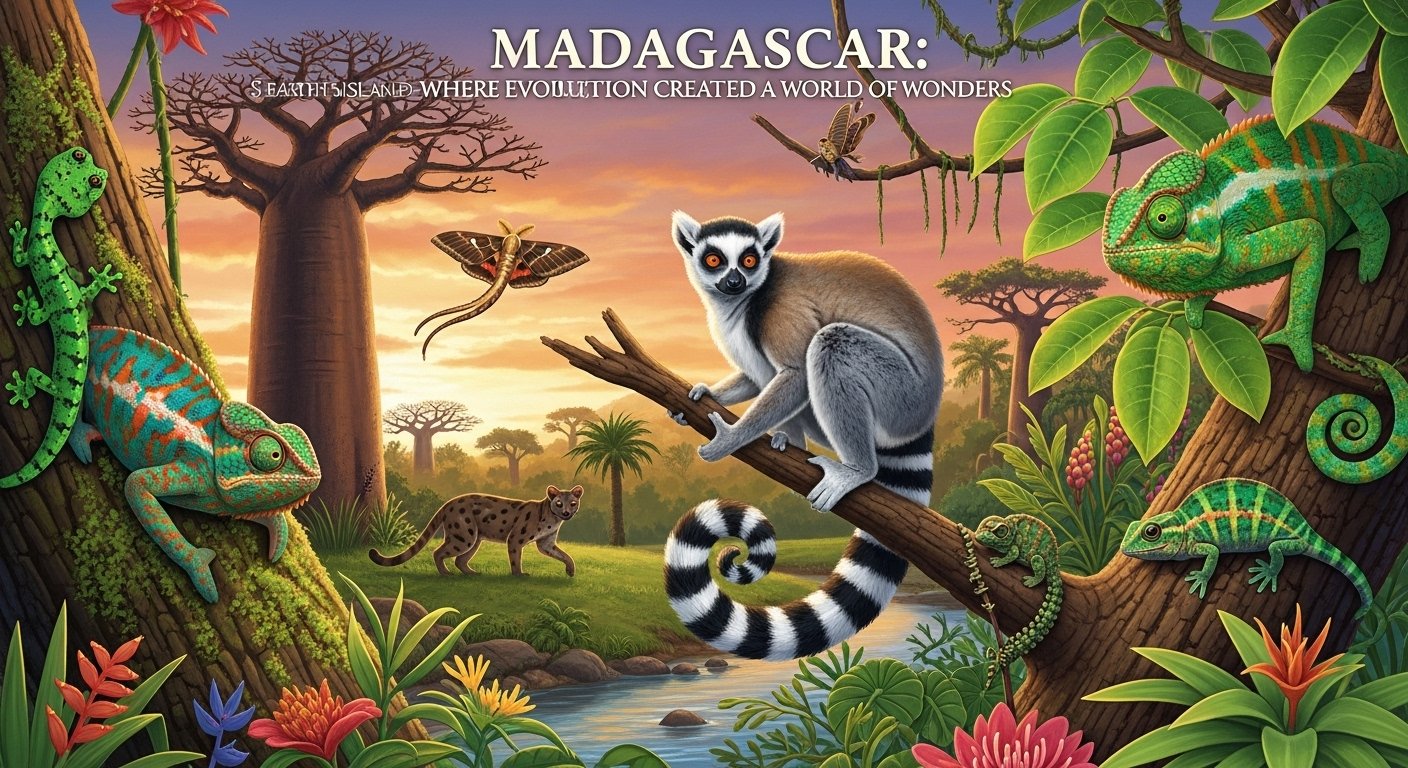

Imagine a massive island, roughly the size of Texas, drifting away from the African mainland about 88 million years ago, completely cut off by vast ocean expanses. No bridges, no migrations—just a handful of plants and animals that somehow made it across on floating debris or by sheer luck. Over those endless millennia, with no outside interference, evolution didn’t just tick along; it went absolutely bonkers. The result is Madagascar, a biodiversity hotspot where over 90% of the wildlife and plants are found nowhere else on the planet. If you’re into unique animals in Madagascar, lemur species, baobab trees, or mind-bending landscapes like the Tsingy de Bemaraha, this is the ultimate guide that’ll have you booking flights or at least diving into more nature documentaries.
This post is inspired by a captivating nature documentary that brings Madagascar’s wonders to life in vivid detail. It’s not just pretty pictures; it’s a story of isolation, adaptation, and the fragile beauty of our world. Whether you’re researching Madagascar wildlife conservation, planning an eco-tourism adventure, or simply curious about how evolution creates such bizarre creatures, you’ll find tons of value here. We’ll explore the island’s iconic sights, delve into its evolutionary history, touch on human impacts, and even connect it to the broader sweep of human civilization. By the end, you’ll see why Madagascar isn’t just a travel destination—it’s a living lesson in life’s resilience.
To kick things off, here’s the full documentary embedded right here. Watch it as you read— the visuals will make everything pop:
The Avenue of the Baobabs: Ancient Guardians of Madagascar’s Landscapes
One of the most iconic symbols of Madagascar is the Avenue of the Baobabs, a dirt road lined with these massive, otherworldly trees near the western town of Morondava. These aren’t your typical oaks or pines; baobabs look like they’ve been planted upside down, with spindly branches resembling roots clawing at the sky. Scientifically known as Adansonia grandidieri, they’re endemic to Madagascar and can live for over 1,000 years, growing up to 30 meters tall with trunks that balloon out to store water—up to 120,000 liters in some cases. This adaptation is crucial in Madagascar’s arid western regions, where dry seasons can stretch for eight months or more.
The avenue itself is a protected area now, but it wasn’t always. In the past, locals cleared surrounding forests for agriculture, leaving these giants standing like sentinels in a sea of rice paddies and scrubland. At dawn or dusk, when the sun dips low, the scene turns magical: golden light bathes the trees, casting long shadows and creating reflections in nearby ponds during the wet season. It’s no wonder this spot draws photographers and tourists from around the globe, searching for that perfect Madagascar sunset photo. But beyond the Instagram appeal, baobabs play a vital ecological role. Their flowers bloom at night, attracting bats and moths for pollination, and their fruits—packed with vitamin C—are a superfood for both wildlife and people. Local communities use the bark for rope, the leaves for medicine, and even hollow out trunks for water storage in times of drought.
Sadly, climate change and deforestation threaten these icons. Rising temperatures could disrupt their water-storing cycles, and illegal logging persists despite protections. Conservation efforts, like those from the Madagascar Biodiversity Partnership, are planting new baobabs and educating locals on sustainable uses. If you’re planning a trip, visit during the rainy season (November to April) for lusher surroundings, but pack bug spray—mosquitoes love the humidity.

File:Avenue of the Baobabs at Sunset.jpg – Wikimedia Commons
Tsingy de Bemaraha: Navigating Madagascar’s Razor-Sharp Stone Forest
Shift gears to the northwest, and you’ll find one of Earth’s most surreal landscapes: the Tsingy de Bemaraha National Park, a UNESCO World Heritage site spanning over 1,500 square kilometers. “Tsingy” means “where one cannot walk barefoot” in Malagasy, and once you see it, you’ll get why. This is a vast karst plateau where rainwater has eroded limestone over millions of years, sculpting it into a labyrinth of jagged pinnacles, some soaring 70 meters high. The formations are so sharp they can slice through shoes, let alone skin, creating a natural barrier that’s protected hidden ecosystems for eons.
Geologically, it’s a masterpiece of dissolution. Acidic rain seeps into cracks, widening them into gorges and caves, while underground rivers carve out networks below. Above ground, the result is a “stone forest” with narrow canyons, suspension bridges for hikers, and viewpoints that drop your jaw. Adventurers cross rickety rope bridges, peering into abysses where rare species thrive in isolation. The park’s biodiversity is off the charts—home to 11 lemur species, over 100 bird types, and plants like the endemic pachypodium that cling to the rocks.
Exploring Tsingy isn’t for the faint-hearted. Trails involve scrambling, harnesses, and guides who know every twist. But the payoff? Unparalleled views and a sense of stepping into a lost world. Conservation here focuses on anti-poaching and reforestation, as illegal rosewood logging has scarred nearby areas. For eco-tourists, combine a visit with canoe trips down the Manambolo River, spotting crocodiles and ancient tombs carved into cliffs. If Madagascar landscapes fascinate you, Tsingy embodies the island’s raw, untamed side.

Cascades Africa Safaris – Destination Information
Lemurs: The Charismatic Kings of Madagascar Wildlife
No discussion of Madagascar biodiversity is complete without lemurs, the primates that rule the island’s forests. With over 100 species, all evolved from a common ancestor that rafted over from Africa around 60 million years ago, lemurs showcase evolution’s creativity in isolation. Without competition from monkeys or apes, they diversified into niches everywhere—from tiny mouse lemurs (the world’s smallest primates) to the once-giant sloth lemurs that weighed as much as gorillas.
Ring-Tailed Lemurs: Social Icons of the South
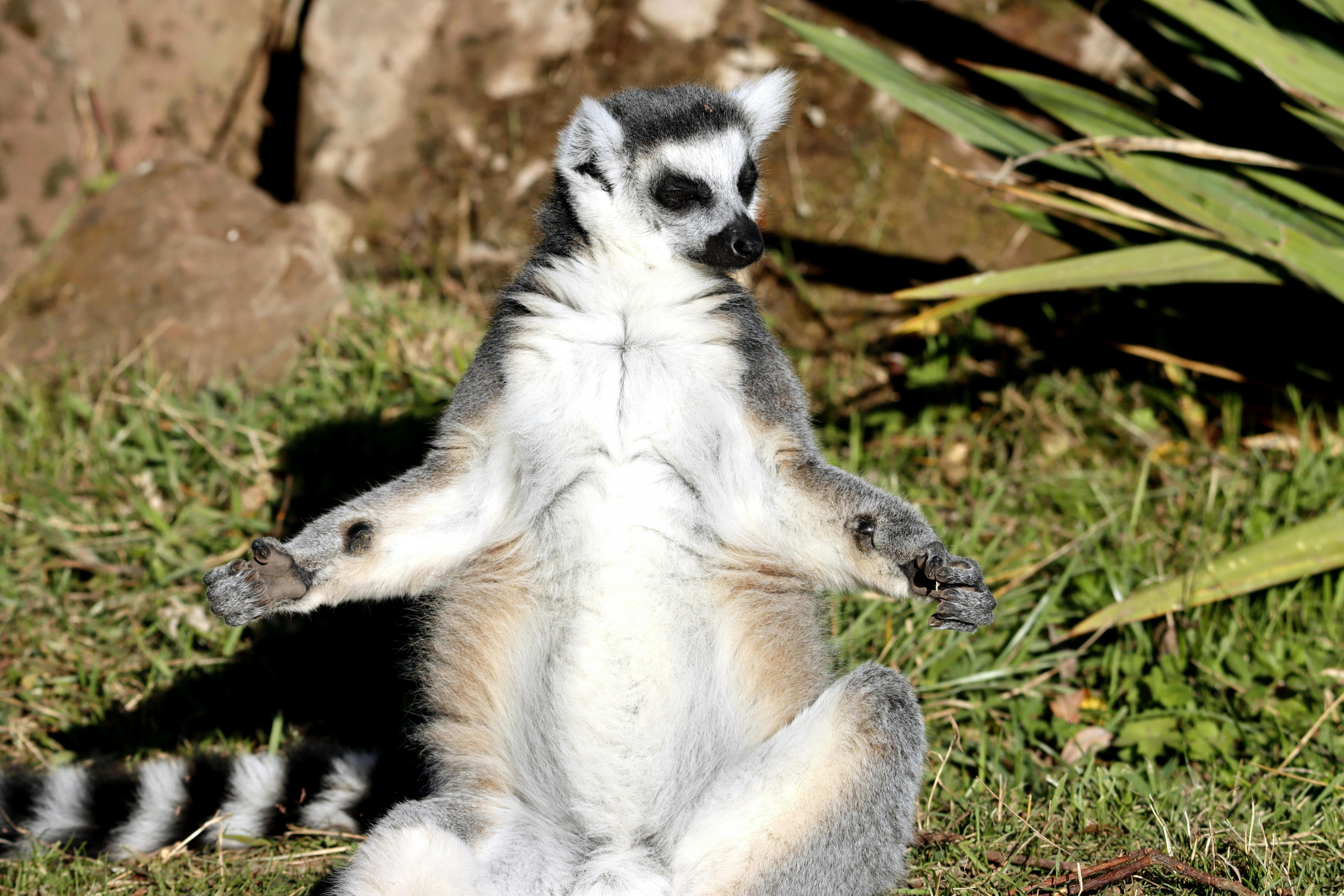
The ring-tailed lemur (Lemur catta) is perhaps the most recognizable, thanks to its bold black-and-white striped tail that acts like a flag during group marches. These guys live in troops of up to 30, led by dominant females—a matriarchal society that’s rare in primates. You’ll spot them sunbathing in “yoga poses,” arms outstretched to warm up after cool nights in places like Berenty Reserve. Their diet? Leaves, fruits, and even insects, making them adaptable but vulnerable to habitat loss. Fun fact: They engage in “stink fights,” rubbing tails with scent glands and waving them at rivals. Conservation status? Endangered, with populations dropping due to hunting and deforestation.
Sifakas: The Graceful Dancers of the Trees
Then there are the sifakas, like the Verreaux’s sifaka, famous for their sideways leaps across the ground—up to 10 meters in a single bound! In trees, they’re acrobats, using powerful hind legs to propel between branches. Found in dry forests like Kirindy, their white fur with dark accents makes them look elegant, almost ghostly. They munch on leaves high in toxins, but their gut bacteria handle it. With only a few thousand left in the wild, projects like the Durrell Wildlife Conservation Trust are breeding them in captivity for release.
Aye-Aye: The Enigmatic Night Stalker
Creepiest of all? The aye-aye (Daubentonia madagascariensis), a nocturnal oddball with bat-like ears, glowing eyes, and a middle finger that’s elongated like a probe. It taps on trees to echo-locate grubs, then gnaws holes and fishes them out—nature’s built-in drumstick and skewer. Superstitions once led to killings, but education is changing that. Aye-ayes are critically endangered, surviving in fragmented rainforests on the east coast.
Lemurs aren’t just cute; they’re key to seed dispersal and forest health. Threats like slash-and-burn agriculture (tavy) have destroyed 90% of original forests, pushing many toward extinction. Organizations like the Lemur Conservation Foundation promote community-led reserves, where locals benefit from tourism.
Lemur in Close Up Shot · Free Stock Photo
Chameleons and Fossas: Masters of Disguise and the Hunt
Madagascar’s reptiles and carnivores add more layers to its wildlife tapestry. Half the world’s chameleon species call it home, with the panther chameleon stealing the show through vibrant color shifts—not just for camouflage but mood, temperature, and mating. Their eyes rotate independently for 360-degree vision, and tongues zap out at 100 km/h to snag insects. In Nosy Be’s rainforests, you’ll see them blending into leaves or flashing reds and blues.
The fossa (Cryptoprocta ferox) is the top predator, a sleek, cat-like creature that’s actually related to mongooses. Up to 1.8 meters long, it climbs trees with ease, ambushing lemurs mid-leap. Fossas are solitary, marking territory with scents, and give birth in dens. With fewer than 2,500 left, habitat protection is crucial.
These animals highlight Madagascar’s endemic species evolution—adaptations fine-tuned over isolation.

Panther Chameleon – Facts, Diet, Habitat & Pictures on Animalia.bio
Human Footprints: Rice Terraces, Villages, and Coastal Life
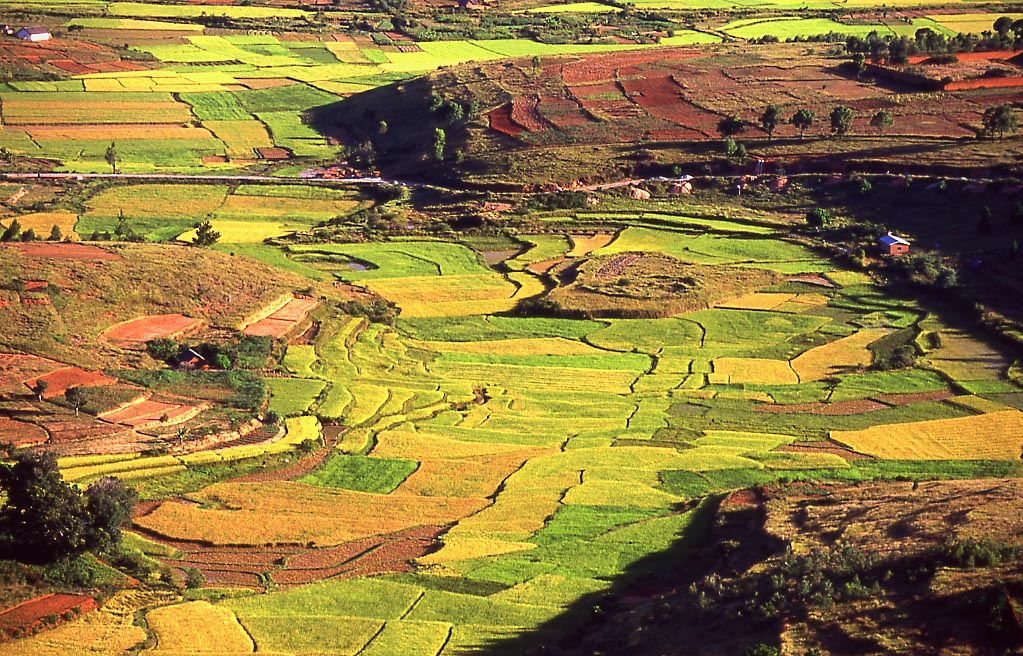
Humans arrived late to this party—around 2,000 years ago, via outrigger canoes from Southeast Asia and Africa. This Austronesian-Bantu mix shaped Malagasy culture, blending rice farming with zebu cattle herding. In the central highlands, terraced rice fields cascade down hillsides like emerald staircases, engineered to capture rainwater and prevent erosion. These paddies, glowing green in the wet season and golden at harvest, feed the nation and create stunning vistas around Antananarivo.
Villages dot the landscape, with thatched homes and markets buzzing with spices, vanilla (Madagascar produces 80% of the world’s supply), and crafts. Coastal areas offer more: Nosy Boraha’s beaches host humpback whale migrations from June to November, where mothers calve in warm waters. Giant Aldabra tortoises roam reserves, living over 150 years. Coral reefs teem with fish, but overfishing and bleaching pose risks.
Travel tip: For sustainable visits, choose operators like Madagascar National Parks, supporting local guides.
File:Imerina countryside riziere rice paddies Madagascar.jpg …
The Comoros Connection: Volcanic Neighbors and Ongoing Creation
The documentary also spotlights the nearby Comoros Islands, a chain of volcanic peaks still active today. Mount Karthala on Grande Comore erupts every decade or so, blanketing areas in ash but enriching soil for farming. Black-sand beaches and lava fields contrast Madagascar’s ancient stability, showing Earth’s dynamic side.
These islands share some species with Madagascar but have their own endemics, like the Comoros flying fox. Human life here revolves around ylang-ylang plantations (for perfumes) and fishing.
Why Madagascar’s Story Matters in the Bigger Picture of Evolution and Humanity
Tying it all back: While human civilization evolved from single cells to empires and tech (as explored in that sweeping history documentary), Madagascar ran a parallel experiment in solitude. Isolation bred innovation—lemurs filling ape roles, baobabs defying droughts—but also fragility. Human arrival accelerated change: megafauna extinctions, forest loss to 10% of original cover. Today, climate change amplifies threats, with cyclones intensifying and droughts worsening.
Yet hope shines through. Initiatives like REDD+ (Reducing Emissions from Deforestation) pay communities to protect forests. Ecotourism generates $500 million yearly, funding parks. As global citizens, understanding Madagascar’s biodiversity hotspots reminds us of our interconnectedness—losing it means losing potential cures (many drugs come from island plants) and climate regulators.
For the full contrast with human progress, watch this companion video on civilization’s journey:
Madagascar isn’t just strange; it’s a mirror to our own evolutionary path. If this deep dive sparked your interest in Madagascar travel guides, wildlife facts, or conservation efforts, share it far and wide. What’s your favorite Madagascar wonder—the dancing sifakas, the stone tsingy, or something else? Comment below and let’s chat! For more, explore resources like the World Wildlife Fund or plan your adventure responsibly.