
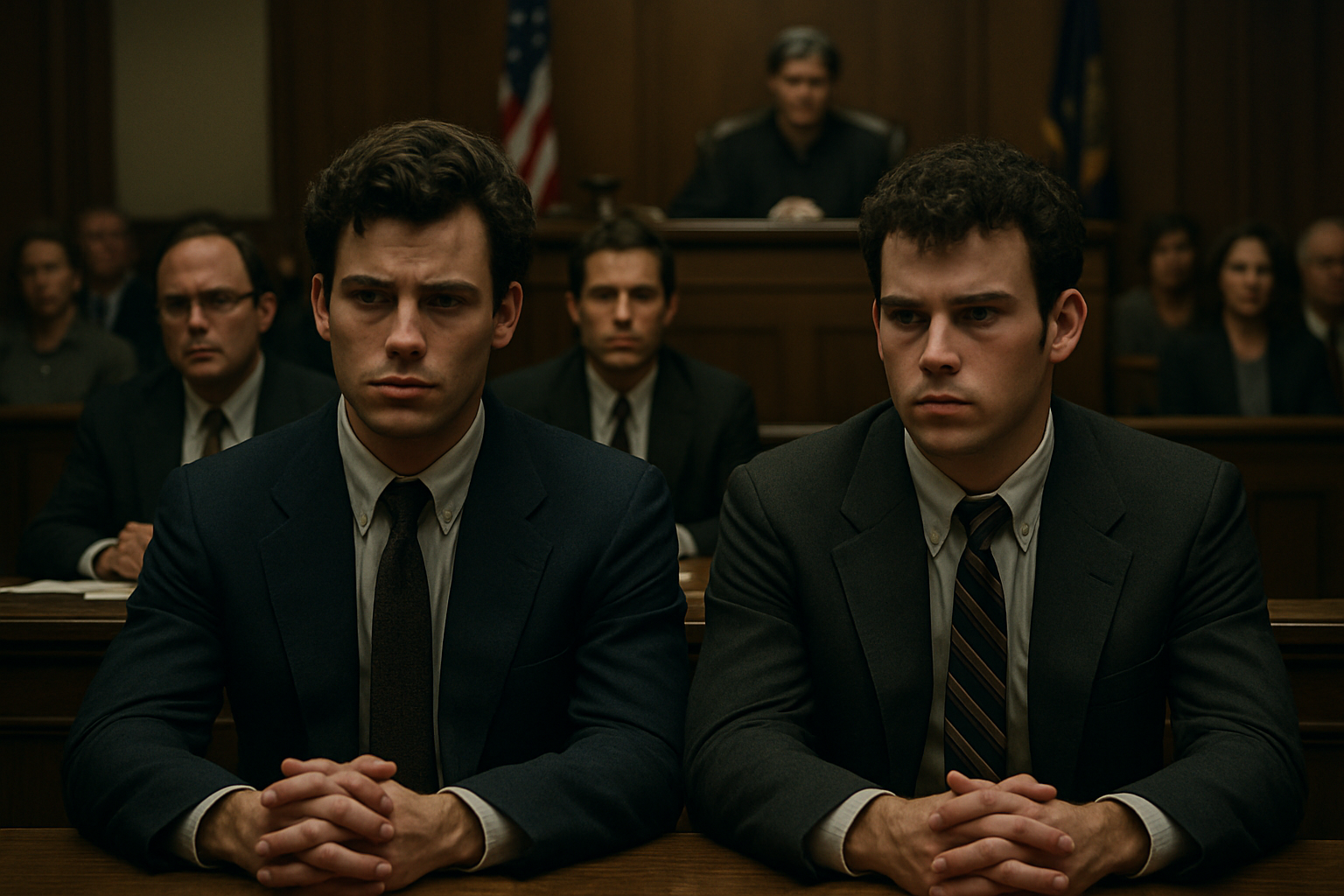

Introduction to the Menendez Brothers
The Menendez brothers, Erik and Lyle, became subjects of national scrutiny following the shocking murders of their parents, Joseph and Mary Menendez, in 1989. Born in 1970 and 1971 respectively, the brothers grew up in a wealthy household in California, where their father was a prominent entertainment executive. Early childhood for the Menendez brothers was marked by privilege, but beneath the surface, familial tensions and conflicts began to simmer. Their father, known for his strict demeanor and high expectations, exerted considerable control over the family dynamics, often leading to an oppressive environment. Such tensions were compounded by their mother’s penchant for materialism and her internal struggles, creating a complex web of emotional distress that would later play a pivotal role in the events of their lives.
Despite their outward appearances of affluence, both Erik and Lyle experienced significant psychological challenges throughout their upbringing. Reports indicate that they faced emotional and, at times, physical abuse at the hands of their parents, which fostered a deeply ingrained sense of resentment and alienation within them. The brothers found solace in each other, relying on their bond as they navigated a tumultuous family life. This reliance would eventually evolve into a shared secret that profoundly shaped their futures.
The tragic climax of their story unfolded during the summer of 1989 when the Menendez brothers murdered their parents in an act that would lead to one of the most notorious trials in American history. The motivations behind this violent act were as complex as the family dynamics that preceded it, encompassing factors such as fear, desperation, and a desire for liberation from an oppressive household. Understanding the backgrounds of Erik and Lyle Menendez is essential in piecing together the tragic narrative of betrayal and murder that continues to captivate public interest decades later.
The Murders: A Shocking Crime
On the night of August 20, 1989, a gruesome crime unfolded in a Beverly Hills mansion that would captivate the nation. This tragic incident involved the brutal slayings of José and Kitty Menendez, a wealthy couple who appeared to lead a charmed life. The discovery of their lifeless bodies marked the beginning of a high-profile case that would reveal deep-seated family issues, intrigue, and betrayal.
The events of that fateful evening began when the Menendez brothers, Erik and Lyle, returned home after watching a movie. What began as an ordinary night quickly turned into an unimaginable horror. The brothers, armed with shotguns, confronted their parents in the opulent living room of their home. In a calculated and cold execution, they shot their parents multiple times. The sheer violence of the crime astounded the authorities who arrived on the scene, stunned by the brutality displayed in the family residence.
The aftermath of the murders sent shockwaves throughout the nation, as details continued to emerge. What initially seemed to be a robbery gone wrong triggered a deeper investigation revealing a complex family dynamic filled with allegations of abuse. Thus, the narrative shifted from a straightforward investigation of a shocking crime to a sensationalized scrutiny of the Menendez family, their relationships, and the psychological implications that accompanied the tragedy. News outlets were abuzz with speculation, stirring a public fascination that persisted through the trial proceedings.
As the case unfolded, both brothers emerged as central figures in a scandal that epitomized betrayal and familial dysfunction. This shocking crime not only altered the course of their lives but also initiated discussions about family secrets, violence, and justice, leading to a cultural phenomenon that still influences discussions on similar cases in contemporary society.
The Investigation: Unraveling the Truth
The tragic murders of Kitty and Jose Menendez in 1989 initially sent shockwaves through their affluent community in Beverly Hills, prompting a comprehensive investigation by law enforcement. As police arrived at the crime scene, they were quickly inundated with numerous pieces of evidence that suggested the need for an in-depth inquiry. One of the first actions taken by investigators was to interview the surviving family members, including Erik and Lyle Menendez, who had reported the killings. Their accounts, at first, appeared consistent but later raised suspicions among detectives and forensic experts.
As the investigation progressed, law enforcement reviewed the circumstances surrounding the murders, including motive, opportunity, and means. Initial suspect profiles included anyone with potential grievances against the Menendez family. However, cracks began to show in the brothers’ narratives; they claimed to have been present during a brutal home invasion that led to their parents’ deaths. The investigators’ focus increasingly shifted to Erik and Lyle as contradictions emerged in their stories and forensic evidence started to paint a different picture.
Various tactics were employed during the investigation. Detectives scrutinized the brothers’ backgrounds, searching for evidence of financial woes or family discord. Additionally, they consulted the media, which played a crucial role in shaping public opinion and often sensationalizing the case. The coverage attracted widespread attention, leading to public scrutiny of the Menendez family dynamics and the brothers’ emotional and psychological profiles. As the investigation unfolded, the complexities of betrayal, familial ties, and economic pressures became clear, further enmeshing Erik and Lyle in a web of suspicion that would affect their lives indefinitely.
Trial of the Century: Media Frenzy and Public Fascination
The trial of Erik and Lyle Menendez in 1993 quickly gained the moniker “Trial of the Century,” largely due to the sensational nature of the crime and the extensive media coverage it generated. The brutal murder of their parents, José and Mary Louise Menendez, stirred a societal fascination that transcended the courtroom, drawing in a captivated public eager for updates on the unfolding drama. This case opened a window into the complexities of familial relationships, mental health, and the nature of justice itself.
As the trial commenced, the media played a dual role, serving both as a provider of information and as an influential force shaping public perception. Cameras were allowed inside the courtroom, making the Menendez brothers’ testimony available to millions at home. The prosecution presented a case centered around the idea of premeditated murder motivated by greed, framing the siblings as cold-blooded killers. This narrative aimed to elicit outrage from the public, highlighting the perceived betrayal of the brothers against their parents.
Conversely, the defense’s strategy sought to humanize Erik and Lyle by showcasing their traumatic childhood experiences, including allegations of abuse. This defense resonated with many who struggled to reconcile the horrors of the crime with the vulnerability of the accused. The contrasting approaches sparked heated debates among viewers, leading to polarized opinions about guilt, innocence, and the impact of their upbringing on their actions.
The trial not only captivated but also polarized the public, reflecting broader societal attitudes toward crime, particularly around issues of family dynamics and mental health. The intense media scrutiny highlighted the ways in which televised trials could influence the judicial process, potentially affecting jury impartiality and public trust in legal proceedings. As the Menendez brothers’ story unfolded in a very public arena, it became emblematic of the complex interplay between media, justice, and societal fascination with crime.
Key Testimonies: Family Secrets Revealed
During the highly publicized trial of the Menendez brothers, key testimonies played a crucial role in shaping both the emotional and legal arguments presented to the jury. Central to these testimonies were the allegations made by Erik and Lyle Menendez regarding their tumultuous childhood and the accusations of abuse perpetrated by their parents. These revelations not only painted a portrait of a family shrouded in secrecy but also added layers of complexity to the legal narrative.
The brothers’ assertions of enduring sexual and physical abuse were powerfully articulated during the trial. They described an upbringing marred by trauma, detailing events that, according to them, led to the eventual tragic culmination of their actions. Testimonies from psychologists and therapists were instrumental in exploring the psychological implications of their childhood experiences. Experts argued that such abuse could significantly distort a child’s perception of reality and influence their responses in adulthood. This professional insight provided a framework through which the jury could potentially understand the brothers’ motive, framing it not solely as murder but as a response to years of suppressed trauma.
The emotional weight of these allegations was further emphasized by family members who testified about the environment in which the brothers grew up. They portrayed a façade of a perfect family while hinting at a much darker reality behind closed doors. This contradiction was pivotal in swaying the jury’s perception, challenging the notion that the brothers acted purely out of malice. By revealing these family secrets and the distressing history that led to the tragic events, the testimonies brought to light the complex interplay between psychological trauma and criminal behavior.
Verdicts and Sentences: Life Behind Bars
The legal proceedings surrounding the Menendez brothers captured the attention of the public and the media alike, culminating in verdicts delivered in 1996. After a highly publicized trial, Lyle and Erik Menendez were found guilty of first-degree murder in the brutal killings of their parents, Jose and Kitty Menendez. The jury’s decision reflected a profound sense of the severity of their actions, which were rooted in the complex psychological and emotional narratives that emerged throughout the trial. The brothers claimed they acted out of fear and psychological torment stemming from years of abuse, yet the court ultimately determined that the premeditated nature of their actions warranted a strong legal response.
On March 2, 1996, the Menendez brothers received their sentences: life imprisonment without the possibility of parole. This punishment not only marked a significant legal resolution but also brought closure for the family members of the victims. The sentences sparked intense discussions about the complexities of justice, mental health, and the potent influence of familial dynamics. The brothers’ legal team had attempted to invoke a defense centered on emotional distress and the psychological repercussions of their upbringing. However, the stark reality of life behind bars became their new existence, overshadowing claims of a troubled past.
The ramifications of their convictions extended beyond the brothers themselves, affecting their extended families and the victims’ loved ones profoundly. For the Menendez family, the verdict underscored the tragic outcome of a life filled with strife and violence, leaving them grappling with the consequences of betrayal. Likewise, the victims’ families found a sense of closure, albeit bittersweet, as they faced the reality that their loved ones were not only gone but had been murdered by their own children. The Menendez brothers, now serving life sentences, have since become emblematic of a case that challenges society’s understanding of familial bonds, abuse, and the boundaries of moral culpability.
Cultural Impact: Legacy of the Menendez Brothers
The case of the Menendez brothers, Lyle and Erik, which intrigued the public in the early 1990s, has left a significant cultural imprint that continues to resonate today. Central to the legacy of this highly publicized trial is its portrayal across various media forms, including documentaries, films, and television shows. These representations have ignited interest and, in some instances, controversy as they attempt to depict the complexities of familial relationships, mental health issues, and the dynamics of the criminal justice system.
Documentaries exploring the Menendez brothers’ case have served as important educational tools that engage audiences with the psychological aspects of their actions. Programs such as “The Menendez Murders: Erik Tells All” delve into the brothers’ claims of enduring years of childhood abuse, prompting a broader discussion surrounding the impact of trauma. This raises questions about how such experiences can shape behavior and may alter perceptions of guilt and innocence in a court of law.
The case has also been dramatized in various films and series, which often emphasize the sensational aspects of the story while sometimes glossing over the intricate emotional complexities. This duality can create polarized views in society, drawing attention both to the sensationalism of true crime and the underlying issues of domestic violence and mental health. Such portrayals not only entertain but provoke critical reflections on the nature of abuse and familial bonds.
Furthermore, the Menendez brothers’ case has played a pivotal role in shifting conversations about mental health within legal contexts. As mental health awareness has grown, it has prompted advocates to push for more nuanced considerations when examining cases involving trauma and its effects on behavior. This cultural impact underscores the ongoing relevance of the Menendez case in discussions about justice, empathy, and understanding across various societal dimensions.
Latest Developments: Life After the Trial
Since their highly publicized trials, which concluded in the mid-1990s, Erik and Lyle Menendez have faced an ongoing journey within the confines of the prison system. Convicted for the brutal murder of their parents, the brothers were sentenced to life in prison without the possibility of parole. They have been incarcerated for over two decades, during which they have both sought avenues for appeal and change in their circumstances.
In recent years, both Erik and Lyle have remained in the public eye through various media appearances and interviews. They have participated in documentaries and series reflecting on their past actions and the traumatic upbringing that they assert contributed to their violent behavior. Erik, in particular, has spoken candidly about his mental health struggles, including issues related to depression and anxiety that have compounded during his incarceration. These reflections have sparked debates about the psychological impact of their upbringing and the adequacy of the legal system in addressing such factors during their trials.
Moreover, appeals for their sentences have been pursued intermittently but often rejected. Their legal team has argued that the brothers did not receive a fair trial, pointing to media bias and alleged misconduct during the proceedings. Despite these efforts, the men remain behind bars, and their chances for early release seem slim. In terms of rehabilitation, both Erik and Lyle has expressed a desire to engage in educational programs and therapy sessions offered within the prison, focusing on personal growth and understanding their past actions.
The public perception of the Menendez brothers continues to evolve, with some viewing them through a lens of empathy due to their traumatic background. Nonetheless, their case remains a poignant reminder of the complexities surrounding crime, punishment, and mental health in the justice system.
Conclusion: Reflecting on Justice and Morality
The Menendez brothers’ case is often characterized by its profound complexity, intertwining themes of familial betrayal, societal perceptions of justice, and moral ambiguity. This story, which has captivated public attention for decades, serves as a compelling illustration of the intricacies inherent in the American judicial system. As we reflect upon the events surrounding the brutal murders of their parents, it becomes evident that the narrative transcends simple classifications of right and wrong.
At the forefront of this case is the interpretation of justice and how it is dispensed. The brothers claimed they acted out of fear and lasting trauma, arguing that the environment at home was fraught with abuse. This raises critical questions: How does one accurately assess intent and culpability? Can the backdrop of personal anguish ever justify the extreme measures taken? The perspectives of the Menendez brothers highlight the challenges faced by jurors and the legal community in navigating cases that are laden with emotional and psychological turmoil.
Furthermore, the juxtaposition of public sentiment against legal rulings is noteworthy. The trial was as much a media phenomenon as it was a legal battle, leading to a polarization of opinion regarding the brothers’ actions. How society perceives crime, particularly when entangled with familial dynamics, inevitably influences legal outcomes. This case engages us to consider broader implications about morality, empathy, and our understanding of justice. Were the sentences they received a reflection of fair justice, or a response steeped in societal outrage?
Ultimately, the Menendez brothers’ story encapsulates significant themes relevant to modern discussions about justice, showcasing how a singular narrative can illustrate moral complexities and raise fascinating questions that remain pertinent today.